
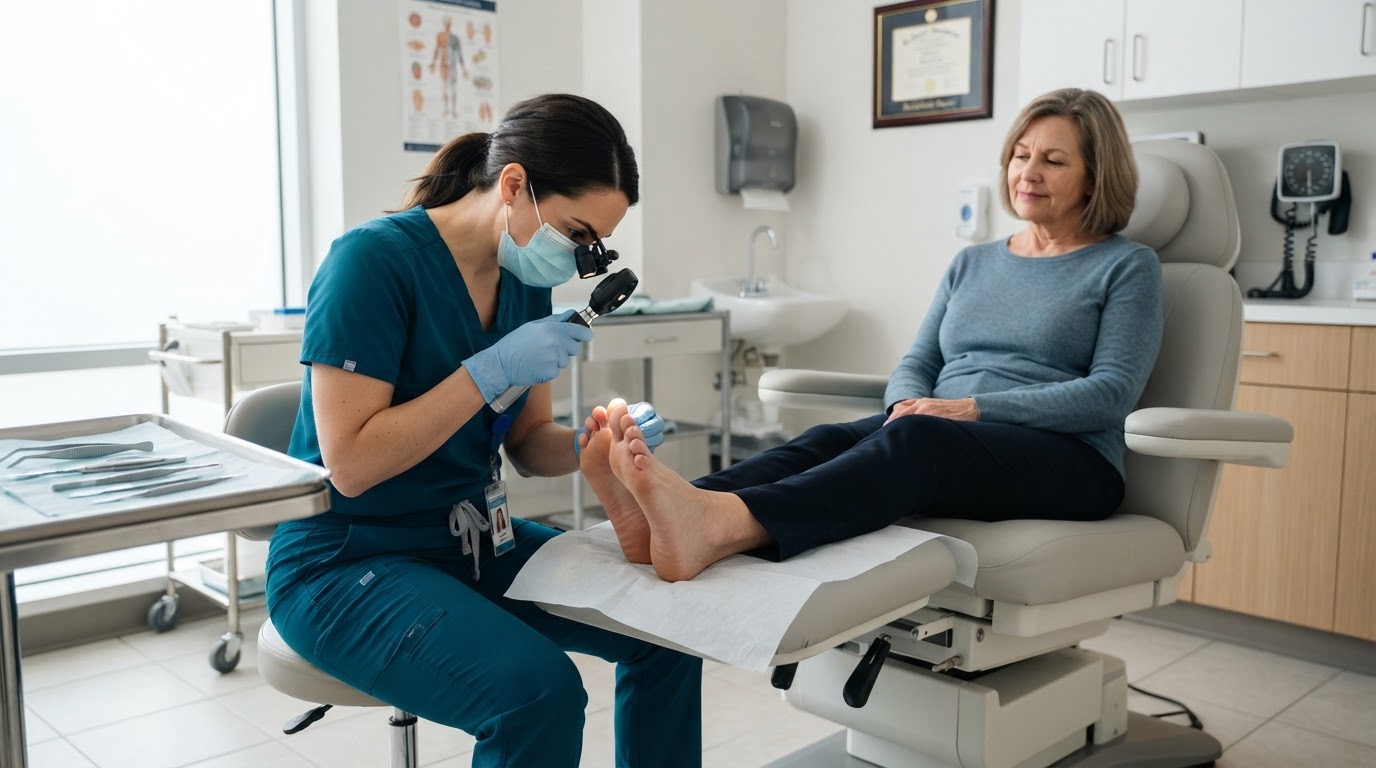
FUNGAL NAILS
Discoloured, thickened or crumbly toenails you'd rather hide?
Fungal nail infections (onychomycosis) are very common in Bermuda's warm, humid climate. Our podiatrists can assess the infection, reduce thickened nail plates, and guide effective treatment

COMMON SYMPTOMS
Does any of this sound familiar?
Fungal nail infections develop slowly and often start at the edge of one nail. Common signs include:
- Yellow, brown, or white discolouration of one or more toenails
- Nails becoming unusually thick, difficult to cut, or misshapen
- Brittle, crumbly, or ragged nail edges
- Debris accumulating beneath the nail plate
- A dull ache or pressure under the nail when wearing shoes
- Spread of discolouration across multiple toenails over time
Fungal nail infections rarely clear on their own without active treatment.
Thinning the nail clinically allows topical treatments to penetrate effectively.
HAVE A QUESTION?
Ask Our Podiatry Assistant
Get instant answers about appointments, treatments, pricing, insurance or what to expect.
POSSIBLE CAUSES
What causes fungal nail infections?
Fungi thrive in warm, damp environments. Several factors increase the likelihood of infection:
Bermuda's climate
Humidity and warmth create ideal conditions for dermatophyte fungi to proliferate.
Untreated athlete's foot
Fungal skin infections between the toes can easily spread into the adjacent nail beds.
Communal wet areas
Walking barefoot around swimming pools, gym locker rooms, or hotel showers.
Nail micro-trauma
Repeated stubbing or tight footwear creates microscopic openings for fungi to enter.
WHEN TO SEEK ASSESSMENT
When should you consider getting fungal nails checked?
Consider arranging an assessment if:
- Over-the-counter lacquers have made no noticeable difference
- Nails are too thick or tough to trim with standard clippers
- The infection is spreading to adjacent toenails
- You have diabetes or compromised circulation
- You want a professional clinical debridement and targeted plan

YOUR APPOINTMENT
What happens when you come to see us?
We assess the nail health, reduce thickness clinically, and advise on effective solutions
We assess
Your podiatrist checks the depth, pattern, and extent of the nail discolouration.
We thin the nail
Painless medical burring gently reduces thickness so topicals can reach the nail bed.
We check the skin
We examine the surrounding skin for concurrent athlete's foot.
We advise
You receive recommendations for evidence-based topical treatments and footwear hygiene.
TREATMENT OPTIONS
Treatment depends on what we find
Fungal nail management requires consistency. Possible approaches include:
Not every treatment is appropriate for every patient. Your podiatrist will discuss suitable options after assessment.
- Clinical nail debridement & thinning
- Targeted topical antifungal regimens
- Concurrent athlete's foot skin treatment
- Footwear hygiene & shoe sanitisation advice
- Routine podiatry maintenance visits
We're here for you
Tired of Living With Pain? We Can Help
STEP 1 OF 2
Request a callback
Fill in your details and one of our team members will be in touch to help.
- Not sure who to ask?
- Not sure what to do next?
- Not sure who can help?
Please fill out the form and chat with one of our team members about your right next step.
OUR CLINICIANS
You'll be seen by our podiatry team
Our clinicians assess a wide range of foot, ankle and lower-limb problems and will explain your options clearly.

Matthew Francis
Clinical Director / Managing Podiatrist

Megan Kelly
General & High Risk Foot Podiatrist

Yaw Nimoh
MSK, Sports & Advanced Practice Podiatrist
Patient Reviews
What our patients say about their care
Real feedback from individuals who have trusted our clinical team with their mobility and foot health.
FAQ
Fungal nail FAQs
READY TO GET STARTED?
Ready to get your fungal nails assessed?
Book online at a time that suits you, or request a callback if you're unsure which appointment is right for you.